“My advice is to pursue a field you genuinely enjoy and work to excel in it”
Could you introduce yourself?
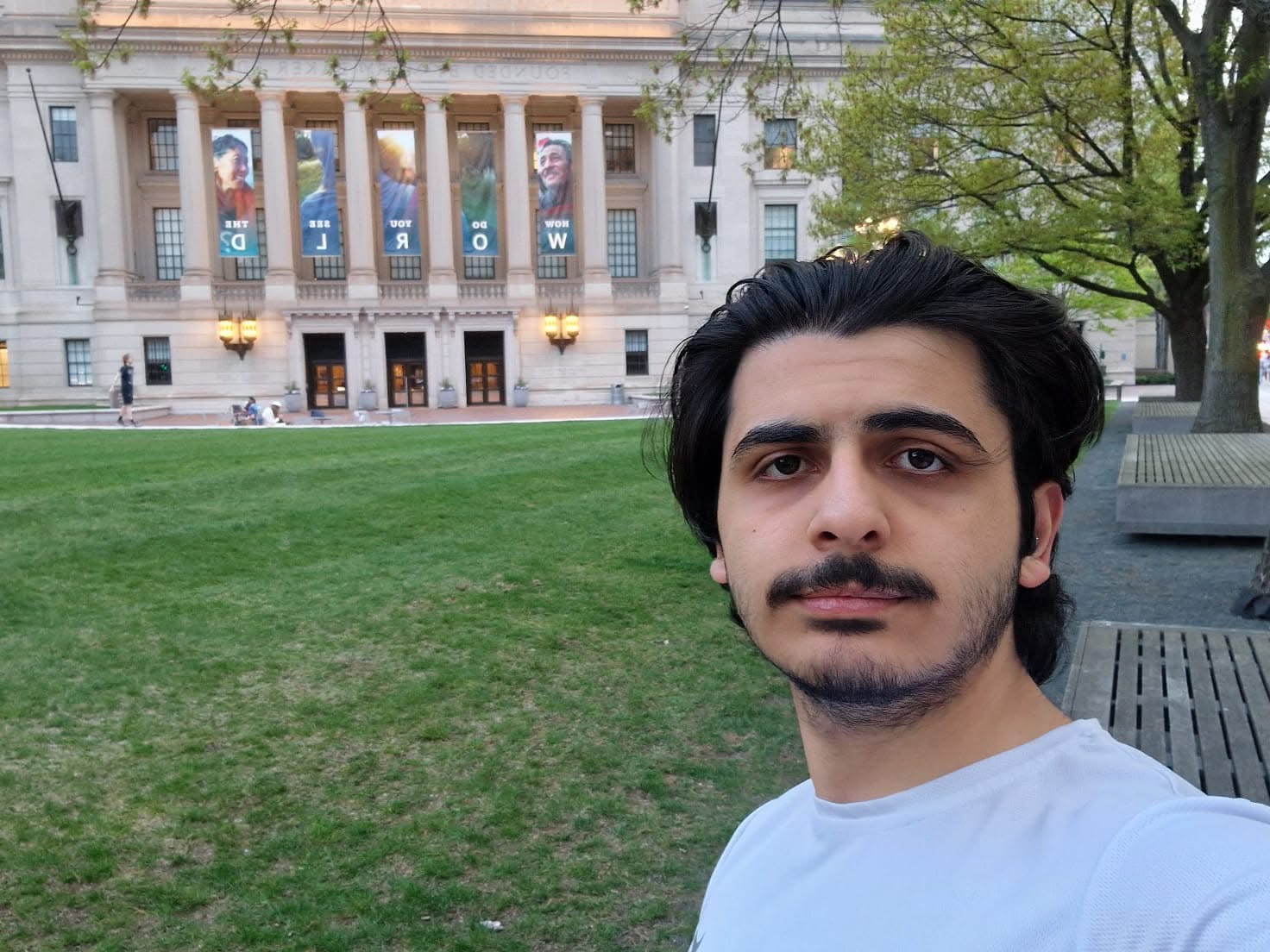
My name is Salman Huseynov. I was born in 2005 and grew up in the village of Pensar in Azerbaijan’s Astara district. I completed my secondary education at School-Lyceum No. 2 in my village, except for seventh grade, which I spent at Istek Lyceum in Lankaran.
Both of my parents are teachers. My father teaches chemistry, and he sparked my interest in science. That interest led me to compete in science olympiads, which in turn helped me get into the Massachusetts Institute of Technology (MIT). Other factors played a part too, of course, but that’s the short version of my story.
What scores and achievements did you apply with?
I scored 1520 on the SAT and 8.0 on the IELTS. I also won a bronze medal in a national biology olympiad, a silver and a gold medal in national chemistry olympiads, and a bronze medal in an international chemistry olympiad.
What is studying at MIT like in terms of classes, research, and other academic activities?
What struck me most was how much the teaching takes students’ needs into account. If you have a health issue or another serious reason, for example, you may be able to get an extension on an assignment, reschedule an exam, or be excused from taking it.
In most cases, there are three ways to engage with the material. In lectures, the professor does most of the talking and explains the topic. In recitations, teaching assistants discuss the material with smaller groups of students and work through practice problems. During office hours, a professor or teaching assistant spends an hour answering students’ questions.
Regardless of their major, MIT undergraduates complete six core science and mathematics subjects and eight subjects in the humanities, arts, and social sciences. The core subjects include two physics courses (Newtonian mechanics and electromagnetism), two mathematics courses (single-variable and multivariable calculus), chemistry, and biology. Students must also meet the swimming requirement to graduate, either by passing a swim test or by completing a swimming course.
Outside class, students can work as teaching assistants or take part in research. There are also opportunities to tutor other students in some subjects.
What is student life like outside the classroom? Are there clubs, competitions, or other social activities?
Before my first semester began, MIT held an event called the Midway. Club members set up booths to introduce students to their organizations. It was a chance to see how many clubs there are at MIT.
The clubs serve a range of interests and communities. There are groups for Turkish, Muslim, and Jewish students, for example. Other groups focus on social or academic activities, such as MIT’s Science Olympiad and chemistry groups.
The dorms are a bit like clubs themselves. We often get together to do things. In December, for instance, students gathered to decorate the dorm’s holiday tree. Sometimes students or dorm staff bake treats and invite everyone to come to their floor. Most people don’t say no to dessert.
Could you share your impressions of the city and the country?
MIT is in Cambridge, a smaller city than its more famous neighbor, Boston. The Charles River separates the two cities, and the Harvard Bridge connects them.
Boston has beautiful historic architecture. In addition to MIT, the Greater Boston area is home to institutions such as Harvard University, Boston University, Northeastern University, and Tufts University.
There’s a subway system here too. In my experience, people don’t use it as much as they do in Baku, but it makes getting around easier. One of the first things you notice when you go into the city is how many people are wearing Harvard shirts. The second thing you notice is the absence of MIT shirts.
To be honest, I haven’t explored the city much. When friends send me photos or videos of Boston, it’s often my first time seeing those places. I’m planning to fix that next semester.
What advice would you give to students who want to study in the United States, at MIT, or abroad in general?
Unfortunately, there’s no guaranteed route to getting into a U.S. university, even for Americans. Still, many young people from Azerbaijan have managed it, myself included. Looking at my experience and theirs, I can see that each person took a different path.
I competed in olympiads, for example, and so did Barış Namazov, who got into MIT before me. Last year, I met Zuleykha Kishiyeva in Azerbaijan. She studies at the University of Pennsylvania (UPenn). Both she and Reyhan Jamalova, another Penn student, had worked on projects. This year, we were happy to hear that Zulfiyya Kishiyeva had been admitted to Stanford University. As far as I know, she had written a book about mathematics.
Of course, their applications included other activities as well. What they have in common is that each of them found something they loved doing and did it well. My advice is to pursue a field you genuinely enjoy and work to excel in it. I see the same pattern among my classmates.
I think doing well at something you love can give you much more than a university acceptance.
